

 English
Zadanie Prostokąt arytmetyczny (ary)
Prostokąt arytmetyczny
Limit pamięci: 128 MB
Na każdym polu kartki w kratkę, składającej się z  kwadratów jednostkowych, zapisano jedną liczbę całkowitą.
W tym zadaniu interesują nas prostokąty arytmetyczne położone na tej kartce,
czyli takie prostokąty złożone z kwadratów jednostkowych, że liczby w każdym wierszu i w każdej kolumnie tworzą ciągi arytmetyczne.
Przypomnijmy, że ciąg arytmetyczny to ciąg liczbowy, w którym każde dwa kolejne wyrazy różnią się o tę samą liczbę.
kwadratów jednostkowych, zapisano jedną liczbę całkowitą.
W tym zadaniu interesują nas prostokąty arytmetyczne położone na tej kartce,
czyli takie prostokąty złożone z kwadratów jednostkowych, że liczby w każdym wierszu i w każdej kolumnie tworzą ciągi arytmetyczne.
Przypomnijmy, że ciąg arytmetyczny to ciąg liczbowy, w którym każde dwa kolejne wyrazy różnią się o tę samą liczbę.
Na danej kartce w kratkę poszukujemy największego prostokąta arytmetycznego, tj. obejmującego najwięcej kwadratów jednostkowych. Przykładowo, największy prostokąt arytmetyczny na poniższej kartce składa się z dziewięciu kwadratów jednostkowych:
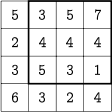
Wejście
W pierwszym wierszu wejścia znajduje się jedna liczba całkowita  (
( )
oznaczająca liczbę zestawów testowych opisanych w dalszej części wejścia.
Opis każdego zestawu rozpoczyna się od wiersza z dwiema liczbami całkowitymi
)
oznaczająca liczbę zestawów testowych opisanych w dalszej części wejścia.
Opis każdego zestawu rozpoczyna się od wiersza z dwiema liczbami całkowitymi  i
i  (
( ).
W każdym z kolejnych
).
W każdym z kolejnych  wierszy znajduje się
  liczb całkowitych z zakresu od
  do
do  .
Są to liczby wpisane w poszczególne kwadraty jednostkowe kartki w kratkę.
Rozmiar każdego pliku wejściowego będzie nie większy niż 20 MB.
.
Są to liczby wpisane w poszczególne kwadraty jednostkowe kartki w kratkę.
Rozmiar każdego pliku wejściowego będzie nie większy niż 20 MB.
Wyjście
Należy wypisać  wierszy z odpowiedziami dla kolejnych zestawów testowych.
Odpowiedzią dla jednego zestawu jest jedna liczba całkowita równa liczbie kwadratów jednostkowych zawartych w największym
prostokącie arytmetycznym na kartce opisanej w danym zestawie.
wierszy z odpowiedziami dla kolejnych zestawów testowych.
Odpowiedzią dla jednego zestawu jest jedna liczba całkowita równa liczbie kwadratów jednostkowych zawartych w największym
prostokącie arytmetycznym na kartce opisanej w danym zestawie.
Przykład
Dla danych wejściowych:
2
4 4
5 3 5 7
2 4 4 4
3 5 3 1
6 3 2 4
2 3
0 1 2
1 2 3
poprawną odpowiedzią jest:
9
6
Autor zadania: Jakub Radoszewski.